We use machine learning technology to do auto-translation. Click "English" on top navigation bar to check Chinese version.
Shiny Shoe launches Monster Train 2 on Amazon Web Services
Independent game studio Shiny Shoe had ambitious plans from the get-go in developing strategic roguelike deck building game Monster Train 2. Released May 21, 2025 across platforms, the game pits players against dangerous enemies in a tactical quest for survival. A follow up to the critically acclaimed Monster Train released in 2020, the sequel introduces all new characters, player mechanics, and modes. Along with enhanced animation and audio, the game also features a fully updated backend that runs almost entirely on Amazon Web Services (Amazon Web Services).
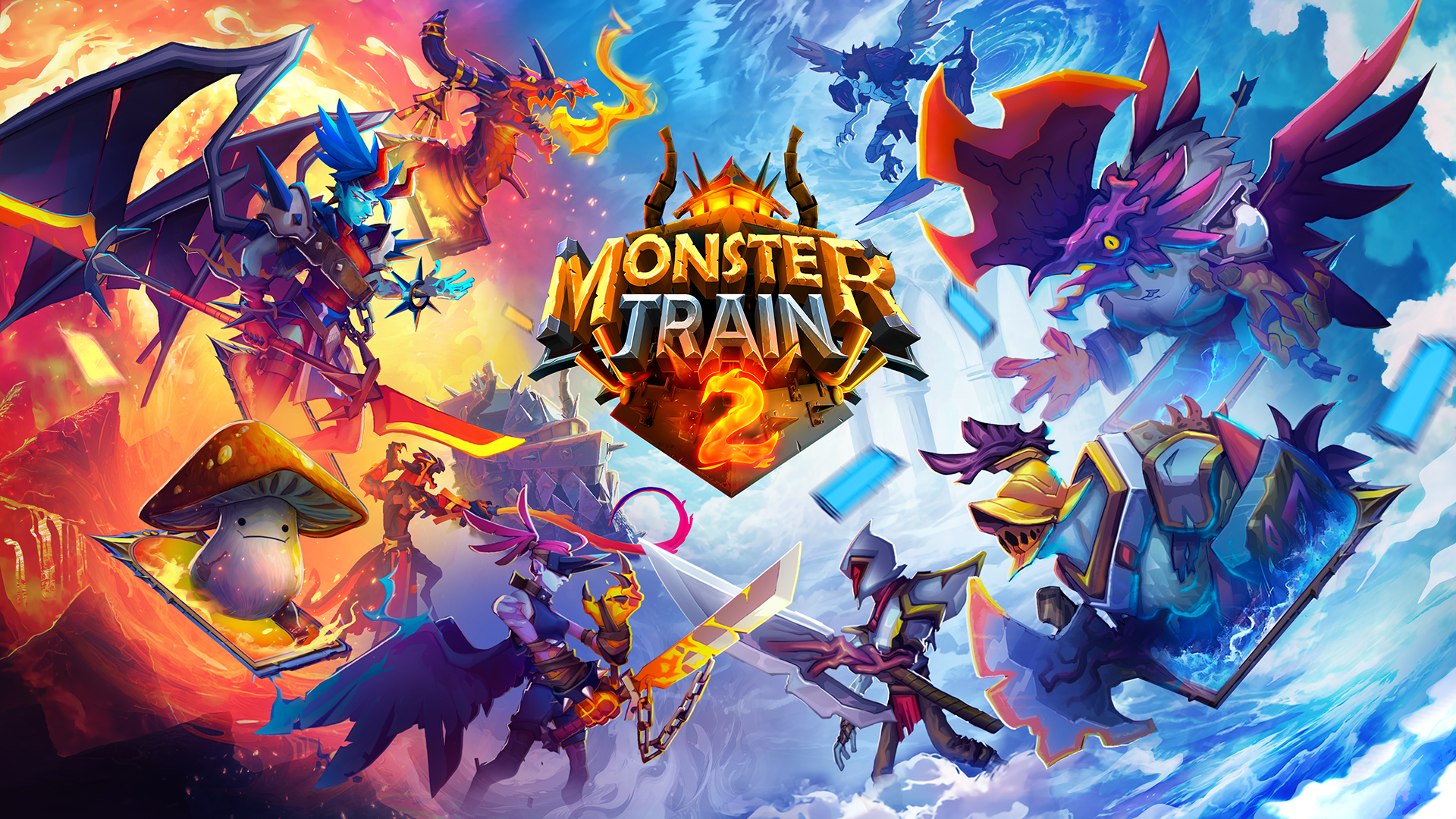
Monster Train 2 is poised to surpass the success of the original, which was called “a pleasant, mind-blowingly addictive exercise” in a Game Informer review. It was also named the Best Card Game by PC Gamer, and has earned an overwhelmingly positive Steam rating, with nearly 19,000 reviews to date.
“As a studio, we aim to delight players with games they truly love and want to engage with over a long period of time. Monster Train was a huge success, and the sequel was our opportunity to revisit and evolve a lot of the cool ideas that we had for the first game, but didn’t include,” shared Mark Cooke, Shiny Shoe CEO. “Additionally, we wanted to elevate the presentation and make every aspect of the game better, from the visuals and music to the controls and user interface.”
From an infrastructure standpoint, building Monster Train 2 on Amazon Web Services streamlined the development process. “Having access to all our services in one place, in the Amazon Web Services Management Console, is a much friendlier way of working,” noted Steve Thoms, Shiny Shoe Senior Engineer. “Everything we need is centralized on Amazon Web Services and we have the control to adjust things like CPU cores and RAM.”
Empowering creativity through technology
Monster Train 2 marks the third game that Shiny Shoe developed using its Amazon Web Services pipeline, which frees the creative team from technical constraints. The design-oriented studio first adopted Amazon Web Services services in 2017 to support key workflow aspects, like storage. In 2021, Shiny Shoe made a full pipeline shift to Amazon Web Services for the development of its 2024 RPG game, Inkbound. Conceived as a centrally hosted cooperative multiplayer title, Inkbound required a backend server solution, and the team ultimately determined Amazon GameLift Servers to be the best fit.
“As a part of pre-production, we evaluated different approaches, including building from scratch using Kubernetes. We found Amazon GameLift, did a proof of concept, and quickly realized that it solved for what we needed. It also fit our long-term launch plans and the service we wanted to provide with the game,” explained Cooke.
Added Thoms, “With Amazon Web Services, we can always find a technical solution to any creative challenge our designers throw at us.”
Amazon Web Services services in play
Across its titles, Shiny Shoe leverages a wide variety of Amazon Web Services services. Some implementations, like data storage on Amazon Simple Storage Service (Amazon S3), are constant, while others are dependent on specific game needs.
For Monster Train 2, the studio stores player data using Amazon Relational Database Service (Amazon RDS) for PostgreSQL. The database holds information about any errors generated from the game, as well as player feedback, which developers can query. Amazon Elastic Beanstalk and Amazon API Gateway enable the game client to query backend data to support gameplay and collect error and feedback information.
Shiny Shoe also consumes analytics by processing Amazon Kinesis data streams using Amazon Data Fire Hose. They then direct the data stream through an S3 bucket to Amazon Redshift, which they can query using a Grafana dashboard. Ephemeral data is stored in an Amazon ElastiCache Redis instance, enabling quick access. Amazon CloudWatch hosts various logs, including information about the game client and backend services; the Shiny Shoe team has alerts and dashboards set up to keep track of API requests. They also leverage Amazon Lambda functions to generate daily challenges, and Amazon Secrets Manager to store environment variables.
For Inkbound, the Shiny Shoe team uses many of the same services, with the addition of Amazon DynamoDB and Amazon GameLift Servers.
Customizing workflows
In addition to using managed Amazon Web Services services, Thoms and others on the development team also built custom tools on top of Amazon Web Services services. Among them is a new gameplay verification mechanism that can be used to validate leaderboard scores. Cooke explained, “We really value player feedback, and they let us know that while they enjoy competitive game aspects, they want fairness, so we had to be sure to support that.”
Another key customization is an Amazon Web Services-hosted website that Shiny Shoe uses to bring together data sources for the design team. It is configured to extract relevant data from game files, then upload the data internally to give the team a clear way to review and understand a large swath of game data and player feedback.
Eyeing the next challenge
With Monster Train 2 successfully launched, the Shiny Shoe team is already working on their next title. Though Cooke isn’t ready to discuss the game since it’s still taking shape, he offered, “From my perspective, we’ll use Amazon Web Services on every future game. They’re part of our suite of development tools and help us manage data at scale.”
“We’ll stick with Amazon Web Services because of the variety of services offered. We know Amazon Web Services services work well for what we need and it’s easy to try out new services,” concluded Thoms.
Learn how to build, run, and grow games with Amazon Web Services. Get in touch with an Amazon Web Services for Games expert.
Further reading
- Amazon Web Services Cloud Game Developer Resources
- How Scopely scaled “Monopoly GO!” for millions of players around the globe
- Guidance for Custom Game Backend Hosting on Amazon Web Services
- Guidance for Multiplayer Session-Based Games on Amazon Web Services

Caleb Cecil
Caleb Cecil is a Games Solutions Architect. With a proven track record in problem-solving, teamwork, and clear communication, Caleb brings both technical expertise and a collaborative spirit to his role. His experience spans across industries demonstrating a well-rounded approach to technology and service.

Caleb Hannon
Caleb Hannon is an Account Manager at Amazon Web Services, working with game tech companies including indie video game studios, sports betting platforms, and software providers. He has been a trusted advisor for startups and enterprises alike, helping to support customers across industries on their cloud journey.
The mentioned AWS GenAI Services service names relating to generative AI are only available or previewed in the Global Regions. Amazon Web Services China promotes AWS GenAI Services relating to generative AI solely for China-to-global business purposes and/or advanced technology introduction.